Considering driveway milling or traditional asphalt paving? Find out the pros and cons of each method and determine which one provides a smoother finish for your road construction project.
In the world of road construction, achieving a smooth surface is critical to the safety and comfort of drivers. Two methods commonly used to achieve this goal are road milling and traditional asphalt paving. Both methods have their advantages and disadvantages, and understanding the differences between them can help determine which one provides a smoother finish. In this article, we'll look at the different aspects of road milling and traditional asphalt paving to determine which method is more effective in achieving a smooth surface.
1. Understanding the road milling process
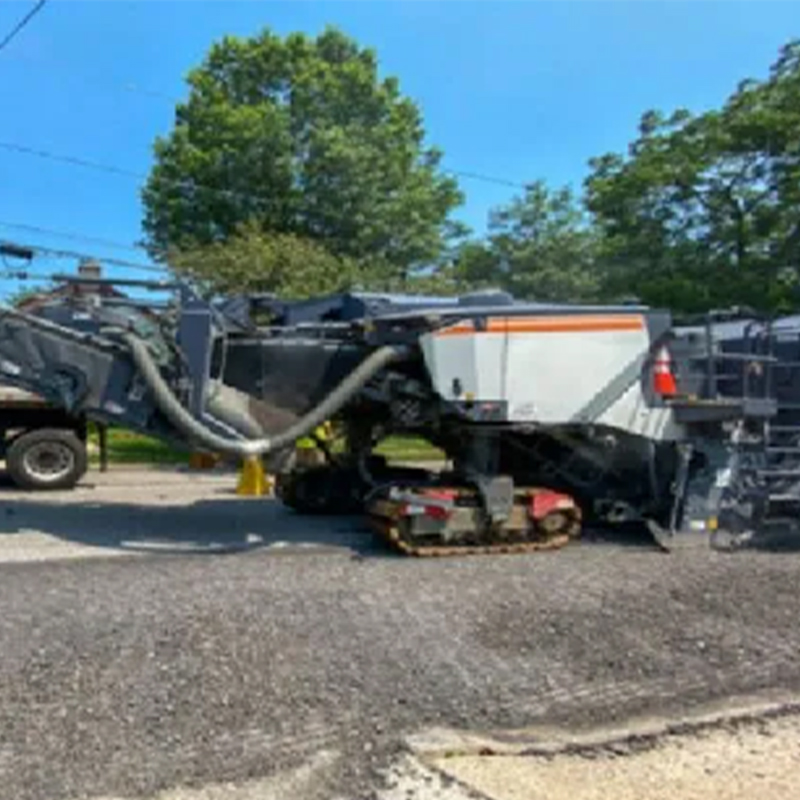
Road milling, also known as cold milling or asphalt milling, is a process that involves removing a layer of existing asphalt pavement using specialized equipment. This method is often used to repair damaged roads or to prepare the surface for a new layer of asphalt. By removing the top layer, road milling eliminates any distortion or unevenness, resulting in a smoother surface.
2. Traditional asphalt laying process
Traditional asphalt paving, on the other hand, involves laying a new layer of asphalt directly on top of the existing pavement. This method is commonly used in new road construction or resurfacing projects. The process begins with preparing the base by compacting the soil and adding a layer of crushed stone. The asphalt is then laid and compacted using heavy machinery to create a smooth surface.
3. Factors affecting the smoothness of the coating
Several factors can affect the smoothness of a pavement, regardless of the method used. One of the most important factors is the quality of the materials used. High quality asphalt and proper compaction techniques can go a long way toward achieving a smoother surface. In addition, the experience and professionalism of the construction team plays an important role in ensuring a smooth and even surface.
4. Precision and accuracy
Road milling provides a higher level of precision and accuracy than traditional asphalt paving. Because milling removes the existing surface, it allows for greater control over the final slope and elevation of the road. This precision helps eliminate any bumps or bumps, resulting in a smoother finish. Traditional asphalt paving, while effective, may not achieve the same level of precision due to the limitations of working on an existing surface.
5. Time and cost efficient
When it comes to time and cost efficiency, road milling has the edge. The road milling process is typically faster than traditional asphalt paving because it eliminates the need for extensive surface preparation. In addition, road milling can be more cost effective, especially for road repair projects, as it requires fewer materials and labor compared to traditional asphalt paving.
6. Environmental Impact
In terms of environmental impact, road milling is considered a more sustainable method. By recycling existing asphalt, road milling reduces the need for new materials and minimizes waste. This process also helps conserve natural resources and reduces the carbon footprint associated with road construction. Traditional asphalt paving, while necessary in certain situations, can have a greater environmental impact due to the use of new materials.
7. Durability and service life
Both road milling and traditional asphalt paving can provide strong, long-lasting road surfaces. However, road milling has the advantage of improved adhesion between the new and existing asphalt layers. This increased traction helps prevent cracks and potholes from forming, increasing the life of the road. Traditional asphalt paving, while still effective, can be more susceptible to surface defects over time.
8. Maintenance and repair
From a maintenance and repair perspective, road milling offers greater flexibility. Since the existing pavement is removed during the milling process, any future repairs or maintenance can be easily accomplished by milling the damaged area and replacing the asphalt. Traditional asphalt installations, in turn, may require more extensive repairs such as patching or resurfacing, which can be time-consuming and expensive.
9. Noise and vibration
Road milling typically creates more noise and vibration than traditional asphalt paving. Equipment used in road milling generates significant noise, which can be a nuisance to nearby residents and businesses. In addition, vibrations generated during the milling process can affect nearby structures. Traditional asphalt paving, while not completely silent, generally produces less noise and vibration.
10. Conclusion: Which method provides a smoother finish?
When comparing road milling and traditional asphalt paving, it is clear that both methods have their advantages and disadvantages. However, in terms of achieving a smoother surface, road milling offers a number of advantages. Its precision, cost-effectiveness, environmental sustainability and long-term durability make it an attractive option for road construction projects. While traditional asphalt paving is still widely used and effective, road milling provides a superior level of smoothness and control over the final road surface.